
Governance, Security, and the Contest for the Levantine Basin and Littoral
The Lebanon framework agreement and Hamas’s dissolution of its Gaza government create conditions that analysts say can facilitate deeper US–Israeli leverage over the Levantine Basin and its littoral, the area near the shore of an ocean or sea. Most often referring to the littoral zone, which is the dynamic, shallow area close to land where water meets the shore. These agreements primarily facilitate the latter conditions through security and governance architecture rather than through any explicit, formal “takeover” of offshore resources on paper. Rettig, E., Friedman, S., & Spanier, B. (2024). Postwar development of offshore energy resources: Legal and political models for developing the Gaza Marine gas field. Bar-Ilan University.
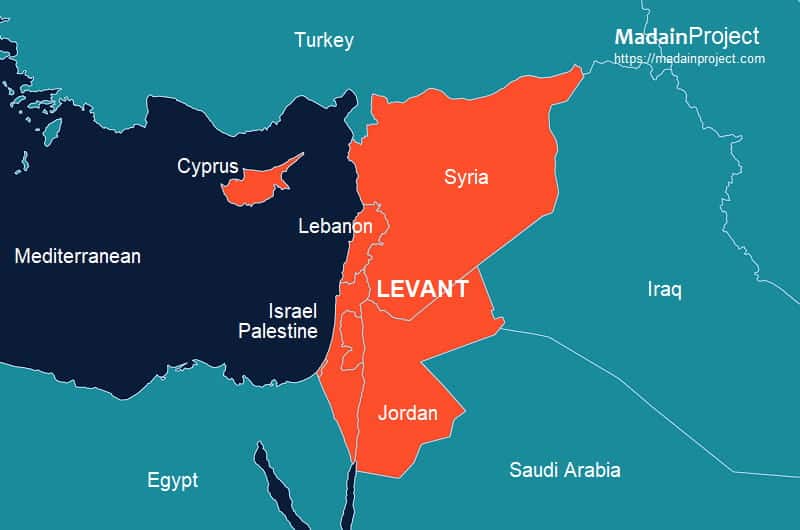
According to a US Geological Survey report published in 2010 on Pubs.usgs.gov, the Levantine Basin, which straddles the maritime borders of Cyprus, Egypt, Israel, Palestine, Lebanon and Syria, contains an estimated 1.7 billion barrels of oil and 122 trillion cubic feet (tcf) of gas. It estimates that eventually there will be enough gas to meet regional and European power demand for decades.
In the context of energy, analysts say the agreements mean that any security or governance arrangements along the coasts of Palestine/Gaza and Lebanon are read by regional actors as not just about “security” but also about who can safely exploit and protect offshore infrastructure and future exploration zones.
EIA.gov and World Socialist Web Site have noted that in 2009 and 2010, Israel discovered gas reserves in two fields in the Levant Basin of the eastern Mediterranean Sea, Tamar and Leviathan, with recoverable natural gas. The Tamar field holds an estimated 283 to 300 billion cubic meters, BCM, and the Leviathan field holds an estimated 620 to 623 BCM; according to sources, this ensures sufficient capacity for both its domestic needs and exports, although some of these fields lie in waters claimed by Lebanon and Gaza.
Implications for resource and coastal control
According to the Hudson publication and cimsec.org, Israel has made significant agreements with European countries to build a pipeline through the major developed latter fields, including constructing processing facilities for the energy deposits in the Levantine Basin. Israel is without the maritime resources such as a “sufficiently sized and equipped navy” to implement proper security measures to protect offshore infrastructure.
Pundits during the Biden administration noted that by shaping who has “effective control” over borderlands, coastal security and airspace, and who can authorize or veto security deployments near offshore infrastructure, they give Israel and the US strong leverage over the conditions under which Lebanon or a future Palestinian authority can exercise their resource rights and negotiate new exploration or pipeline projects.
Prior maritime boundary deals and international law prohibit arrangements that ostensibly reallocate maritime jurisdiction or legal title to Levantine Basin hydrocarbons. Just as the 2022 US-brokered Israel-Lebanon maritime agreement did not legally alter underlying sovereignty or permanently reallocate sovereign title to Levantine Basin hydrocarbons, it delineated an operational maritime boundary and commercialized gas fields without requiring mutual state recognition.
France Diplomatie recent statement stresses that Israel has “no territorial claims” in Lebanon and that the framework aims at Lebanon’s full sovereignty.
Take away from the BBC and Jeruslum Post, looking at real world actions and the results, the combination of security belts, conditional withdrawals, disarmament demands for non-state actors, and heavily US-mediated governance can entrench an intentional lack of balance and order where Israel and the US exercise outsized influence over coastal security, cross-border movement, and the enabling environment for offshore resource development—amounting to a de facto but indirect form of control rather than an overt annexation of the Levantine Basin.
Maritime law delimitation of boundaries
Authoritative sources such as the United Nations’ Handbook on the Delimitation of Maritime Boundaries and International Law and Negotiated and Adjudicated Maritime Boundaries: a Complex Relationship, authored by Alex G. Oude Elferink, have noted maritime jurisdiction and legal title over hydrocarbons in the Levantine Basin can only be re-allocated by states themselves—through new treaties, agreed adjustments to existing ones, or binding decisions/arbitral awards by international courts and tribunals—not unilaterally by companies, international organizations, or third states like the US or Israel acting alone.
Under contemporary law of the sea, especially the UN Convention on the Law of the Sea, UNCLOS, only coastal states can establish, modify, or cede their littoral – exclusive economic zone, continental shelf, and the sovereign rights over resources in those zones.
In the Levantine Basin, narrowing to the coastal states of the Middle East, Lebanon, Syria, and Palestine/Gaza are the primary actors who can legally agree to alter boundaries or resource-rights regimes. As noted by academic.oup, an authoritative online source for hosting peer-reviewed academic journals and scholarly books from Oxford University Press and partners.
The Islamic Post Staff
Resources:
Rettig, E., Friedman, S., & Spanier, B. (2024). Postwar development of offshore energy resources: Legal and political models for developing the Gaza Marine gas field. Bar-Ilan University.
Academic.oup, an authoritative online source for hosting peer-reviewed academic journals and scholarly books from Oxford University Press and partners.