
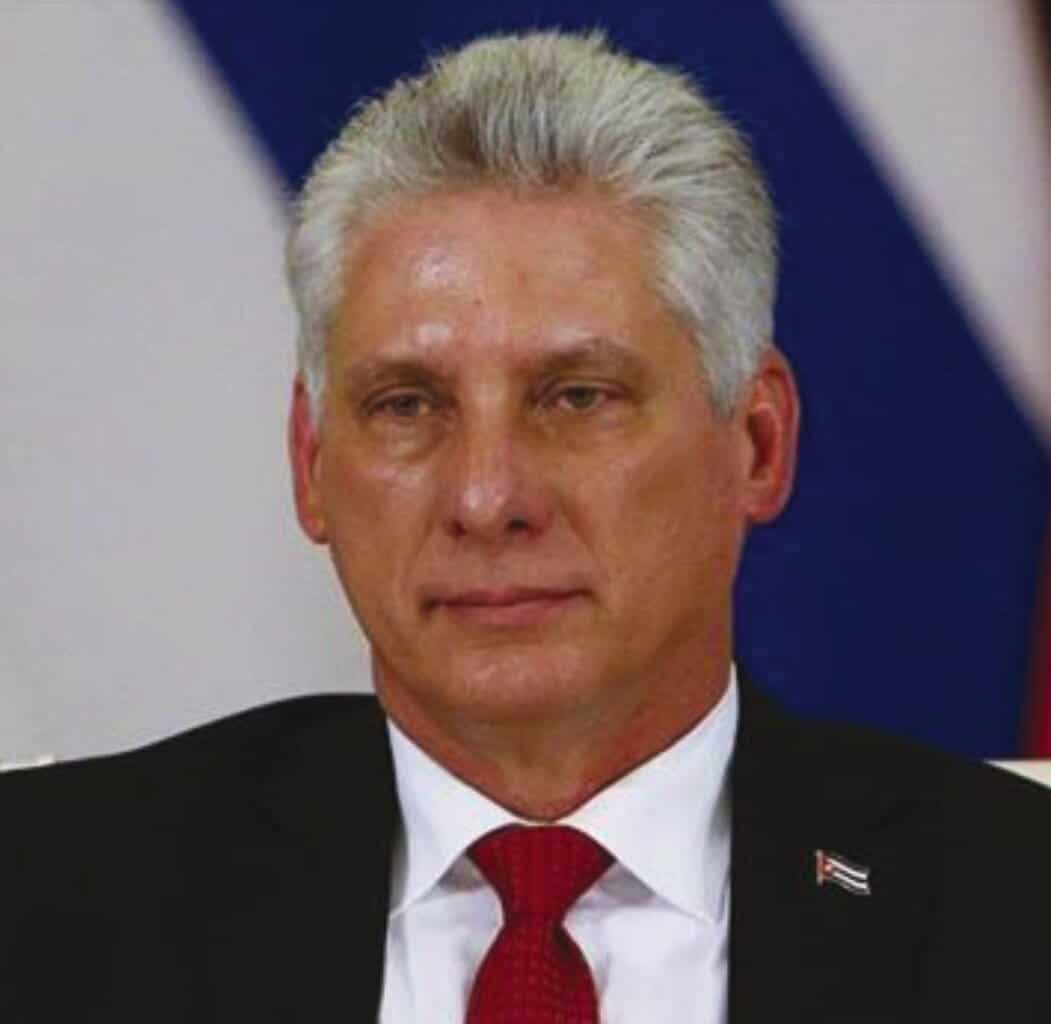
Cuban Leader Refutes Negotiation Claims With Trump
On Monday, Cuban President Miguel Diaz-Canel clarified that his administration maintains contact with the U.S. government only to address technical migration matters and denied the existence of any other dialogue or negotiation with the administration of President Donald Trump.
These statements follow Trump’s assertion on Jan. 11 that contacts with Havana exist. Aboard Air Force One, Trump told reporters, “We’re talking to Cuba, and you’ll find out very soon.”
After refuting the U.S. leader’s claims, the Cuban president reiterated his rejection of the U.S. blockade and the Cuban Adjustment Act.
“The origin and extreme tightening of the blockade are unrelated to Cubans residing in the U.S., who were pushed there by that failed policy and the privileges of the Cuban Adjustment Act,” Diaz-Canel stated, noting they are now victims of changes in migration policies and the “betrayal by Miami politicians.”
Furthermore, the Caribbean leader emphasized that Cuba complies with existing migration agreements, while recalling that his country has always been willing to engage in serious and respectful dialogue with the United States.
Such dialogue, Diaz-Canel said, must be based on sovereign equality, international law, and the principle of non-interference in other countries’ internal affairs – not under the threats that characterize the foreign policy of the White House.
On Sunday, the Cuban president reaffirmed the dignity and sovereignty of Cuba while categorically rejecting any accusations against the island and questioning Washington’s moral authority to make judgments about Cuban reality.
“Those who today hysterically rail against our nation do so sick with rage over the sovereign decision of [these] people to choose their political model,” Diaz-Canel said.
“Those who blame the Revolution for the severe economic hardships we suffer should remain silent out of shame,” he added, noting that such difficulties are a direct consequence of “the draconian, extreme suffocation measures the United States has applied against us for six decades.”
Bilateral tensions have intensified following recent events in the region. On Jan. 7, U.S. Secretary of Energy Chris Wright announced significant pressure on Cuba. His announcement came after a U.S. military strike against Venezuela in the early hours of Jan. 3.
.telesurenglish.net