
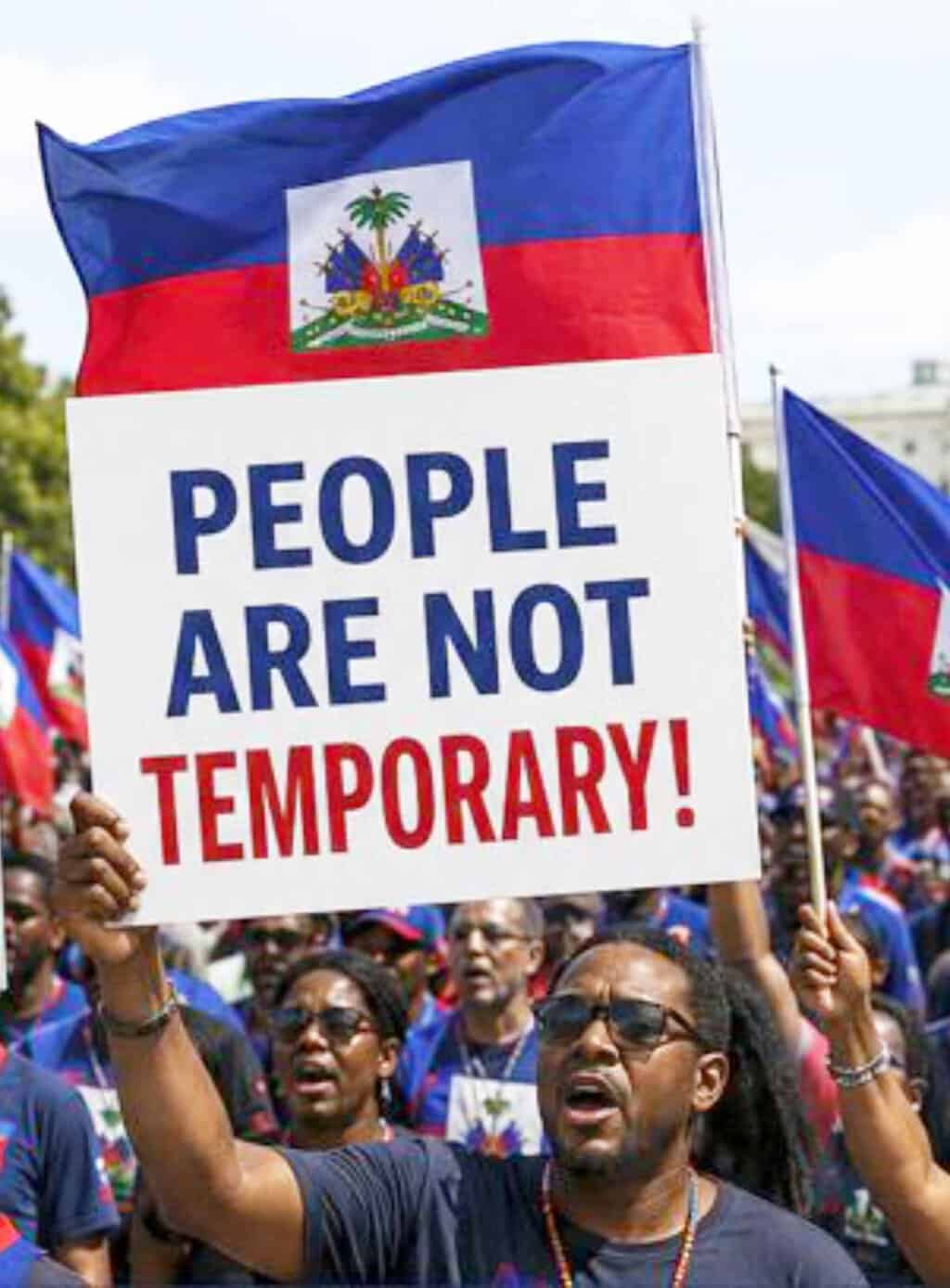
Haiti Voices Concern as U.S. Ends Temporary Protected Status for Haitians
Photo Source: Haitian Globe

Haiti is facing the prospect of an increase in the number of nationals returning from the United States after Washington ended Temporary Protected Status (TPS) for Haitians, as the Caribbean nation continues to grapple with widespread violence, displacement and humanitarian needs.
The U.S. Citizenship and Immigration Services says Haiti’s TPS designation was terminated effective July 27, 2026, following a series of court proceedings over the administration’s decision. The program had allowed eligible Haitian nationals to remain in the United States and obtain employment authorization.
The termination affects an estimated 350,000 Haitians, according to immigrant advocacy organizations. Global Refuge said the end of TPS would remove work authorization and deportation protections for Haitian beneficiaries who have lived and worked in the United States for years.
For Haiti, the development comes as the country continues to confront a severe security and humanitarian crisis.
Armed groups have expanded their influence across parts of Haiti, particularly around the capital, Port-au-Prince. The violence has contributed to large-scale displacement and disrupted access to food, health care and other essential services. The International Organization for Migration reported more than 1.4 million internally displaced people in Haiti as of September 2025.
The United Nations and humanitarian organizations have continued to report new displacement in 2026. In May, the U.N. Population Fund reported that more than 17,000 people had been forced from their homes in the Cité Soleil area of Port-au-Prince following clashes involving armed groups.
The security situation is also reflected in the U.S. government’s own travel guidance. The State Department currently advises Americans not to travel to Haiti, citing crime, terrorism, kidnapping, unrest and limited health care.
The Haitian government has a natural interest in the safe and orderly return of its citizens, but the scale and timing of potential returns could present additional challenges for a country already dealing with displacement and strained public services.
Many Haitians affected by the TPS decision have spent years in the United States. The original TPS designation followed Haiti’s devastating 2010 earthquake, and subsequent administrations extended or modified the program. Approximately 352,000 Haitian nationals held TPS when the termination was announced, according to immigration-policy analyses.
Immigration advocates say many TPS holders have established families, homes and careers in the United States. Some are parents of U.S.-citizen children, while others work in industries including health care, elder care, logistics and other essential services. Global Refuge has warned that employers could lose workers as TPS protections end.
The end of TPS does not automatically mean every Haitian beneficiary will be deported. Immigration status and the possibility of removal depend on an individual’s circumstances and whether the person has another lawful basis to remain in the United States.
The Haitian government is therefore likely to face pressure on two fronts: preparing for potential returns while continuing efforts to address the security and humanitarian conditions that have driven displacement inside the country.
The issue also highlights the complicated relationship between Haiti and its diaspora. Haitians living abroad provide financial support to families in Haiti and remain an important part of the country’s social and economic life.
For Haiti, the end of TPS is consequently not only an immigration matter. It could affect families divided between the two countries, communities receiving returnees and a country already struggling to provide security and basic services to millions of people.
As the U.S. policy takes effect, attention will turn to how many Haitians ultimately return, how U.S. authorities implement removals, and what assistance, if any, is provided to people arriving in Haiti.
Neither the Haitian government nor the U.S. government has announced that all Haitian TPS beneficiaries will be returned to Haiti. The precise number of people who will ultimately leave the United States remains uncertain.
Islamic Post Staff