
Eating like the Holy Nabi (peace be upon him)
Hakimah Raziya A. Mumin
If we could only practice the diet of our Blessed Nabi Kareem (peace be upon him), our illnesses would fall away. The purity of natural foods has taken a back seat. You can only be sure if you grow it yourself. Today’s society has food corruption in every category, vegetable, animal, or mineral.
The foods of the Holy Nabi (peace be upon him) were simple and life-sustaining. Food and good health go hand in hand. Health is a proper balance between the physical, mental, and spiritual components of man. All of these functions work together to bring about order and stability.
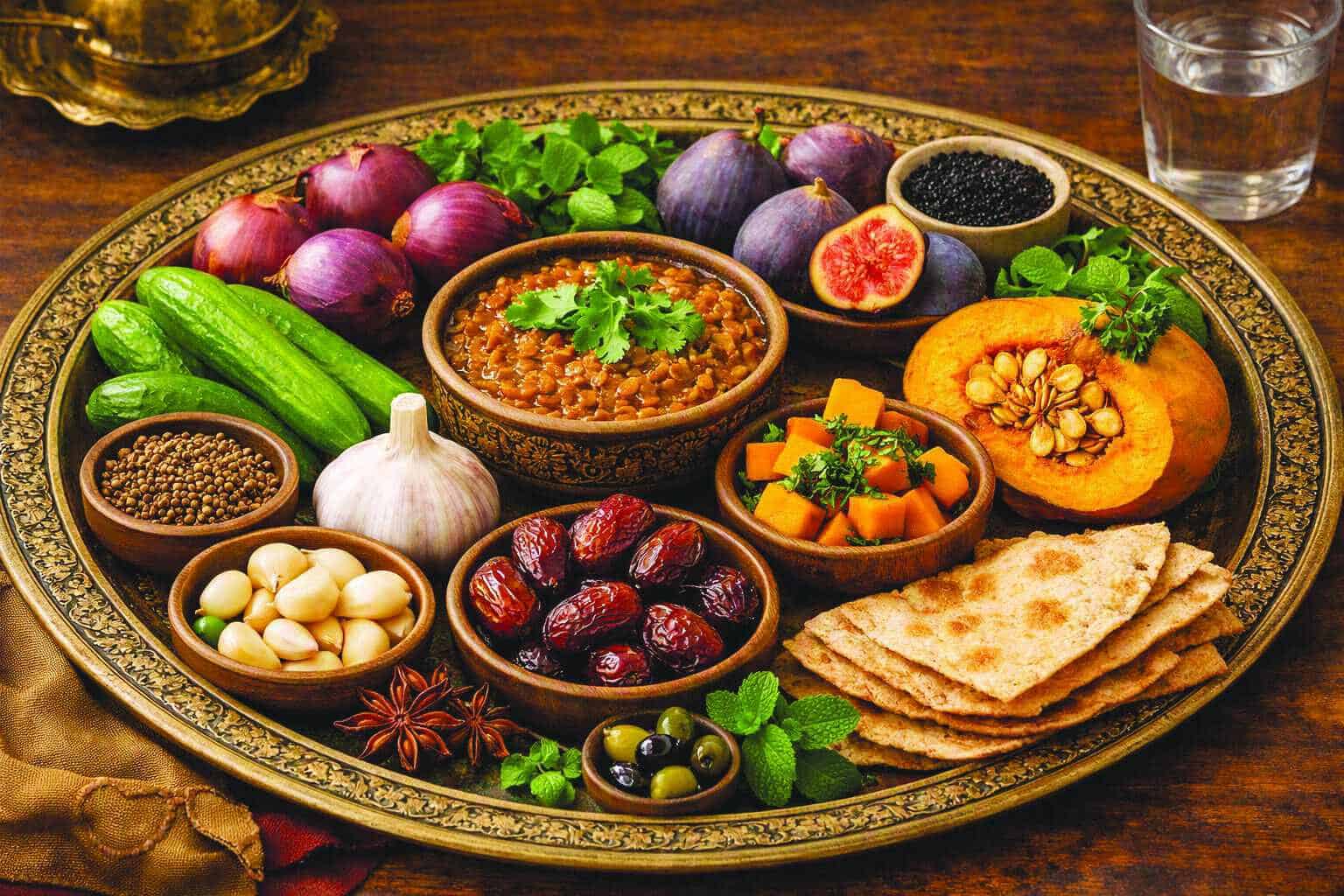
The Holy Nabi (peace be upon him) always ate with gratitude and in moderation. He (Peace be upon Him) sat calmly and always started with bismillah, did not waste food or eat food that was piping hot, and only ate when hungry. He (peace be upon him) didn’t eat while standing or leaning. Many of the foods that He (peace be upon him) ate are mentioned in Holy Quran. Here are a few:
1. Lentils Surah Baqarah 2:61
2. Cucumber 2:61
3. Onions 2:61
4. Garlic 2:61
5. Figs Surah At Tin 95:1
6. Gourd Surah As Saffat 37:146
Lentils are a healthy food and provide the body with phosphorus, vitamin B1, copper, potassium, protein, and micronutrients. Cucumbers are cool and wet; it is best to eat them when they are ripe. They are also used as diuretics. Onions are hot and wet; they are cardioprotective and high in sulfur; they are also beneficial for arteriosclerosis. Garlic detoxifies the body, fights infections, and contains antioxidants. It is also a chelator of heavy metals that helps to regulate blood pressure, cholesterol levels, and blood sugar.
Figs are good for dysentery, constipation, hemorrhoids, sore throat, and diarrhea. Figs are also used to treat tuberculosis; to relieve pain in muscles and bones, and for gout; They also treat numbness and rheumatism. They are good for the liver and for treating kidney stones. They give you strength, and eating them improves gastric juices in the stomach. Figs can be baked, boiled, or steamed.
Gourd/ pumpkin is used for bronchial asthma, coughs, and edema. This is a cure-all type of food. It supports immune wellness, lowers the risk of diabetes, boosts heart health, reduces inflammation, fights off intestinal worms, and aids with complications of the prostate.
A very beneficial fruit that was eaten by our Nabi (peace be upon him) was pomegranate. Pomegranate is traditionally used for cardiovascular health. It has antioxidants, anti-inflammatory, and anti-cancer properties. When it is combined with turmeric, it is most beneficial to the cardiovascular system, as the turmeric increases its anti-inflammatory properties.
Vinegar is another well-known food that he (peace be upon him) ate. Vinegar regulates blood sugar. It is very beneficial for digestive health. It also aids heart health and is anti-microbial. When apple cider vinegar is mixed with honey, it improves digestion and immune function.
Olives/ olive oil/olive leaf all provide healing to the body. The fruit, oil, and leaves have been used for centuries. In the early 1900s, a bitter compound was found in the olive leaf called oleuropein. This ingredient has powerful disease-fighting properties. Researchers found that oleuropein could lower blood pressure and increase blood flow. They also found another existing ingredient called elenolic acid, and this chemical was able to kill many kinds of viruses, bacteria, and parasites.
Narrated Umar Ibn Al-Khattab, the Holy Prophet (peace be upon him) said, “ Eat olives and use its oil, for indeed it is a blessed tree”
Jamiat- Tirmidi, 1851
Everything that he (peace be upon him) did was exemplary. To carry on the legacy of his (peace be upon him) greatness, a reevaluation of our diets should be put under the microscope. Implementing the standards and manners in which he (peace be upon him) ate brings about a higher level of our faith.
Unfortunately, the human palate has become adulterated. Food portions have become larger, and eating has become a sport; this behavior is outside of the humble diet of our Nabi (peace be upon him). Food is big business, and it is also making the masses sick. In Islam, we are advocates for moderation in eating. We should avoid greed, because we are ever mindful that Allah Ta Ala is forever watching us. It is important to reflect, correct, and improve constantly.
There are too many foods to mention here that our Blessed and Holy Nabi (peace be upon him) ate. However, here are a few recipes which have been taken from the book, Early Islamic Culinary Arts, Based on Prophetic Traditions:
Bulgar Pilaf with Basil
Ingredients
- 2 cups cracked wheat (bulgar)
- 2 tablespoons butter
- 3 cups broth/ water
- 1 teaspoon salt
- 1 cup boiled garbanzo beans
- Half bunch basil
- Black pepper
- Yogurt
Preparation
· Fry the bulgar in a medium saucepan with butter
· Add water, salt, and garbanzo beans, then leave it to cook.
· Cook at low heat for 20 minutes, add the finely diced basil, turn the heat off, and leave it to brew for 10 minutes.
· Serve it with black pepper and strained yogurt if you wish.
· Serves 4 to 6.
Dates with Cucumber
Ingredients
- 4 cucumbers
- 1 teaspoon mustard seeds
- 1 teaspoon salt
- 10 pieces of dates
- Juice of 1 lemon
- 8 tablespoons of olive oil
- Mint leaves
Preparation
· Dice the cucumbers with their skins in circles and put them on a plate.
· Crush the mustard seeds and salt in the mortar, and then add the stoned dates into the mixture.
· Continue to crush until it becomes paste-like.
· After adding the lemon juice and olive oil, stir well.
· Add mint leaves to the cucumbers, and the sauce on top, and then serve.
Resources;
1. www.healthclevelandclinic.org
2. www.organicfact.net
3. www.verywellhealth.com
4. www.whomuhammadis.com
5. www.tib-nabi-for-you.com
6. As-Suyuti’s Medicine of the Prophet (may Allah bless him and grant him peace)
7. Early Islamic Culinary Art, by M. Omur Akkor
8. Chinese System of Food Cures, Preventions and Remedies, by Henry C. Lu
9. Nutritional Healing, by Phyllis A. Balch, CNC
10. www.beingmuslimah.org
11. www.islamweb.net